1X
The second in a two-part series on mental illness, this 1996 episode examined how Hawaii addresses homelessness among people with serious psychiatric conditions. Margaret Copi estimated approximately 3,000 mentally ill homeless individuals in the state, attributing the visible increase to decades of deinstitutionalization and the erosion of affordable housing. She identified Hawaii's narrow legal standard for compelled treatment as a key barrier: courts could impose medication or hospitalisation only when a person posed imminent danger to themselves or others, and guardianship proceedings were lengthy and difficult to obtain. Barry Carlton agreed with that assessment and added that substance abuse substantially expanded the scope of the problem, with roughly another 30 percent of the homeless population presenting psychiatric disturbance linked to alcohol or methamphetamine. Sharon Black described the Honolulu Police Department's Project Outreach, which sought to connect individuals to treatment services rather than rely on criminal arrest, though she noted the frustration of using the criminal justice system as the primary pathway to care. How the legal, medical, and law-enforcement systems can better coordinate to provide treatment to this population is the question the episode raised.
Transcript
Read or download the full transcript (.txt). Speaker labels were assigned automatically and may contain errors.
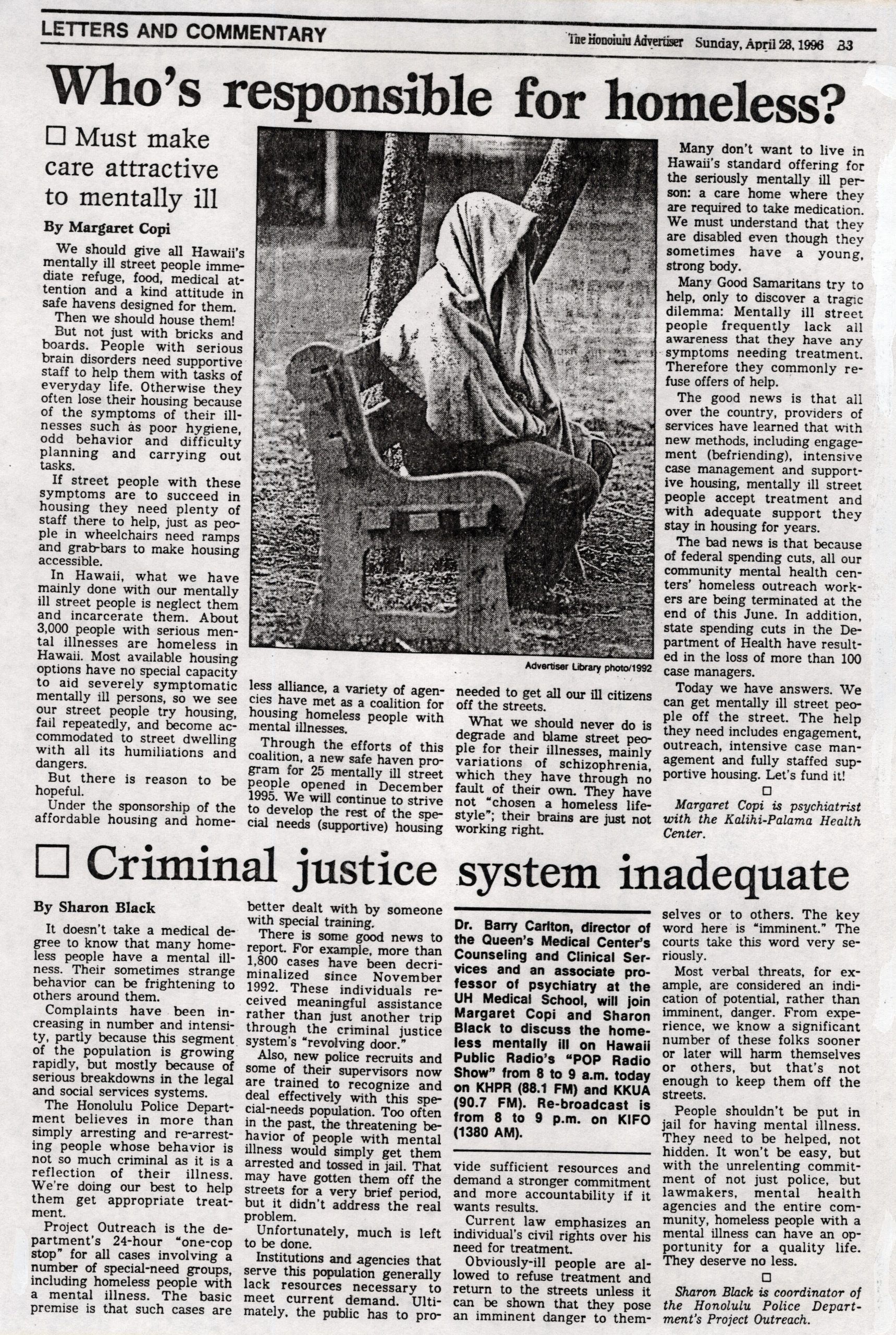
Companion newspaper commentaries
Commentaries by the guests, published in The Honolulu Advertiser around the broadcast.