1X
The central question of what Hawaii should do differently about drug abuse—tighten enforcement, adopt harm reduction, or pursue legalization—was debated in this 1996 episode. Pam Lichty, co-founder of the Hawaii Drug Policy Options Group, argued that harm reduction, grounded in a public health framework, offered a more practical alternative to incarceration, noting that jails were overcrowded with drug-related offenders and that treatment had been shown to be seven times more cost-effective than enforcement alone. Sandra Lacar, Executive Director of the Coalition for a Drug-Free Hawaii, supported increased investment in treatment and prevention but resisted any approach she believed would weaken law enforcement. Kenneth Tano, a captain with the Honolulu Police Department, drew on street-level experience to argue against harm reduction, citing the violent crime he attributed to drug use. Bernie Poner, a physician, contended that the illegality of drugs itself produced most of the associated harms—contaminated needles, overdoses, criminal records—and that legalization was the only medically defensible answer, even if politically unavailable in the near term. Whether Hawaii should shift from enforcement-first policy toward a harm-reduction or treatment-centered approach remains unresolved.
Transcript
Read or download the full transcript (.txt). Speaker labels were assigned automatically and may contain errors.
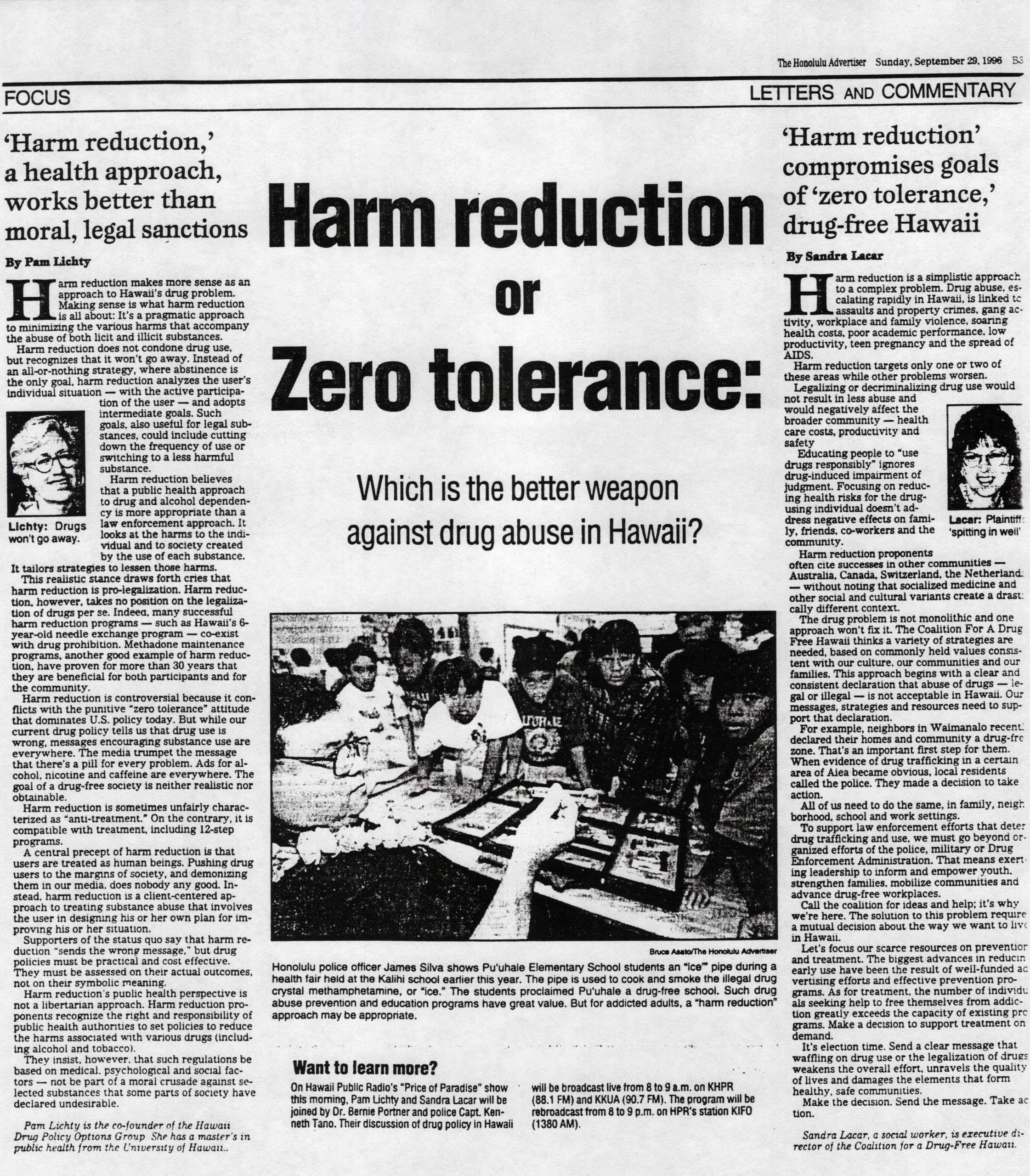
Companion newspaper commentaries
Commentaries by the guests, published in The Honolulu Advertiser around the broadcast.