1X
This March 1996 Price of Paradise broadcast considered the core question of why and how Hawaii punishes criminal offenders, and whether its current practices deter crime or improve public safety. State Representative Quentin Kawananakoa argued for tougher, more immediate penalties, including corporal punishment for young first-time offenders, military-style boot camps as a cost-effective alternative to conventional incarceration, and hard labor requirements for serious repeat criminals. He expressed qualified support for capital punishment on grounds of cost rather than moral objection. Ted Sakai, the state's Director of Prison Services, acknowledged merit in some proposals but stressed that effective punishment requires costly, sustained rehabilitation programs and structured follow-up upon release. Visiting law professor Ken Williams, who had represented death row inmates in Texas, argued that capital punishment is both discriminatory in practice and more expensive than lifelong imprisonment, despite any theoretical justification for it. The central question the episode put before listeners is whether Hawaii can reduce crime by making punishment harsher and more certain, or whether genuine public safety requires greater investment in programs both before and after incarceration.
Transcript
Read or download the full transcript (.txt). Speaker labels were assigned automatically and may contain errors.
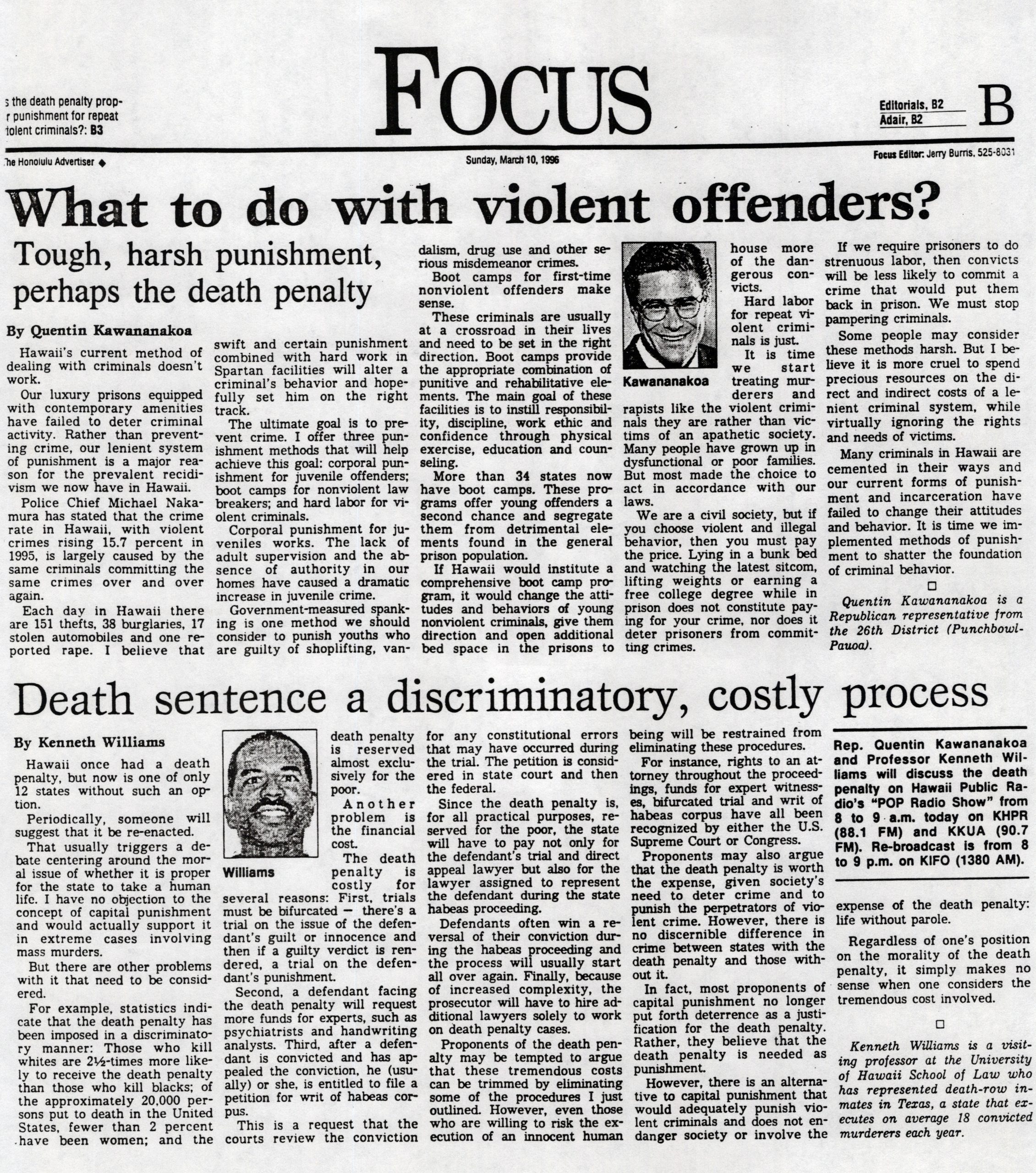
Companion newspaper commentaries
Commentaries by the guests, published in The Honolulu Advertiser around the broadcast.